


From Opportunity to Action: Employers Commit to More Inclusive Workplaces in Tanzania
For a young woman or man with visual impairment, having the right skills is only part of the journey to employment. They also need a fair opportunity to compete, workplaces that are accessible and inclusive, and employers who recognise their skills, aspirations and potential.
In Tanzania, that conversation is moving from awareness towards action.
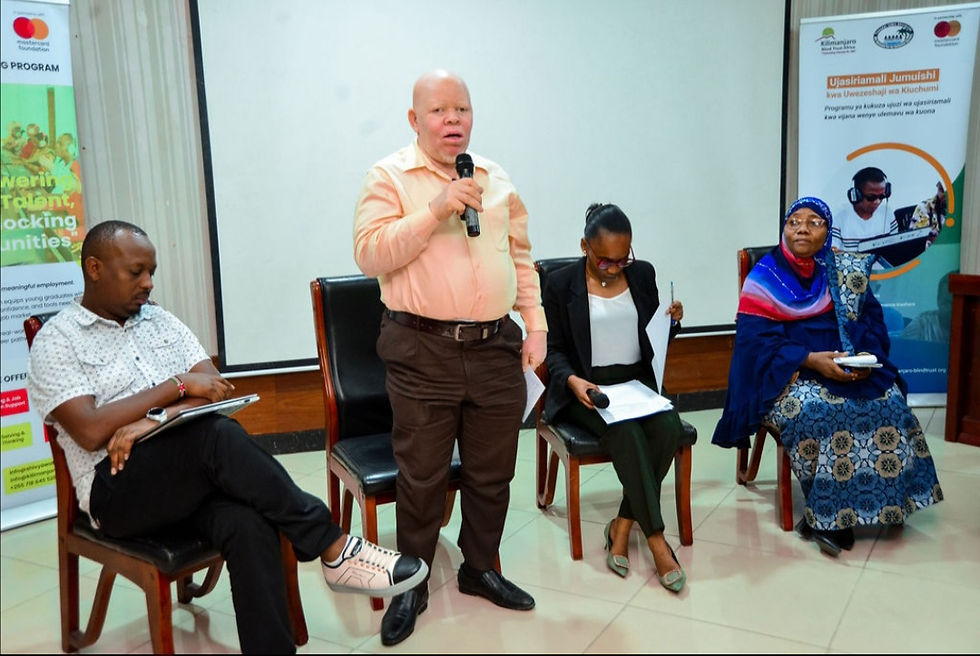
On 7 August 2026, Kilimanjaro Blind Trust Africa (KBTA) and SHIVYAWATA, in partnership with the Association of Tanzania Employers (ATE), hosted the second Employers Roundtable on Inclusive Employment in Dar es Salaam, with the Mastercard Foundation as a supporting partner.
The roundtable brought together 38 employers alongside disability organisations, training institutions and other stakeholders, representing sectors including banking and finance, manufacturing, energy, construction, security, transport, education, NGOs and development organisations, and other private-sector businesses. Building on ongoing employer engagement, the second roundtable placed greater emphasis on turning conversations about inclusion into practical workplace action.

From barriers to practical solutions
For many young people with visual impairment, barriers begin long before they enter the workplace. Limited awareness of disability rights and employment opportunities, assumptions about their capabilities, inaccessible recruitment processes and workplaces, and limited opportunities to demonstrate their skills can prevent qualified candidates from accessing meaningful employment.
Employers explored practical ways to address these barriers, including inclusive recruitment, reasonable accommodation, accessible workplaces, supportive policies, and disability awareness among staff and managers.
More importantly, employers moved from discussion to commitments.
Turning commitments into action
Participating employers made specific, documented commitments around employment opportunities, disability awareness, policy review, internships, vacancy sharing, career guidance, accessibility and inclusion training.
For example, Shigulika Africa Ltd committed to employment and disability awareness initiatives; ORYX to reviewing its internal policies; Taifa Gas to sharing vacancy and internship opportunities; FESAM Construction to disability inclusion training and accessibility audits; and CAPS Limited to internships, employment opportunities, career talks and an accessibility audit.
These commitments were documented in the Employers Roundtable activity report, providing a basis for follow-up. SHIVYAWATA and KBTA will continue engaging participating employers and tracking progress on actions related to policy, accessibility, internships, employment opportunities and disability inclusion.
The goal is not simply to measure interest in inclusion, but to see that interest translate into changes in workplace practice.
Connecting skills to opportunity
Employer engagement is one part of a broader effort under the Youth Employability Skills Training Programme (Tuajirike) to connect skills development with meaningful employment and entrepreneurship opportunities.
Through the programme, KBTA in collaboration with SHIVYAWATA supports young people with visual impairments to develop technical, professional and workplace skills while strengthening pathways to employers and economic opportunities.
The first two cohorts are already showing progress. Of the 20 graduates in Cohort 1, 18 secured internships, with three transitioning into permanent employment. Cohort 2 completed the programme on 3 August 2026, with two graduates having so far secured permanent employment.
Across the two cohorts, five young people have transitioned into permanent employment, with employers including the College of Business Education (CBE), Kigamboni Municipal Council, Tanzania Broadcasting Corporation (TBC), Malinyi District Council and St. Paul's Liuli Secondary School, Nyasa.
These five placements resulted from the programme's broader employer engagement and placement efforts; none of the five institutions was represented among the 38 employers at the 7 August roundtable. The outcomes therefore demonstrate the wider programme's progress in connecting trained young people to employment, while the roundtable provides another platform to expand and strengthen the employer network.

What comes next?
The commitments made in Dar es Salaam provide a practical foundation for continued employer engagement. Follow-through could mean more accessible recruitment, stronger disability-inclusive policies, improved workplace accessibility, inclusion training, increased internship opportunities, vacancy sharing and greater awareness of career opportunities for persons with disabilities.
For KBTA and SHIVYAWATA, the next step is clear: sustain engagement, follow up on commitments and strengthen connections between trained young people with visual impairments and employers.
Because the goal is not simply to place more people in jobs. It is to help shape a labour market where people with visual impairments are recognised for their skills and potential, workplaces are prepared to support them, and employers see disability inclusion as an investment in talent.


What I find appealing about the Los Angeles Dodgers Bomber Jacket is the combination of sports culture and classic outerwear styling. Bomber jackets have always been versatile, and adding a recognizable baseball theme makes the piece feel more personal. It could work particularly well for casual outings, stadium visits, or relaxed evenings with friends.